every writing tip article and their mother: dont ever use adverbs ever!
me, shoveling more adverbs onto the page because i do what i want: just you fucking try and stop me
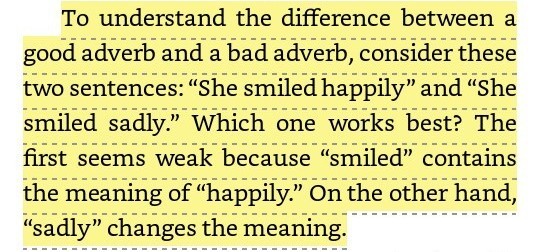
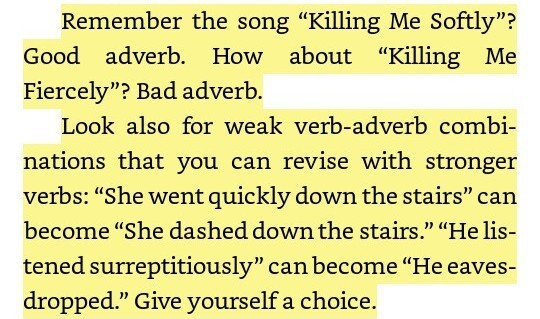
May I add something, because I will never shut up about this book (Writing Tools by Roy Peter Clark):
Verbs are your volume (said, shouted, shrieked), but adverbs change the pitch (gruffly, hoarsely, delightedly).
Tag: writing tips
Quick Guide to Punctuating Dialogue
“This is a line of dialogue,” she said.
“This,” he said, “is a sentence split by a speech tag.”
“This is a full sentence,” she said. “This is a new sentence.”
“This is a sentence followed by an action.” He smiled. “They’re separate sentences, because I didn’t speak by smiling.”
We need an extended post covering ALL sentences.
*cracks knuckles*
(anyone, feel free to correct me if I’ve made any errors, and add your own!)
“This is a phrase”—she was glaring at the computer—”she wrote while glaring at the computer.”
“This phrase—” she paused, pointing at the computer “—she broke up with an action.”
She began, “I can’t believe that you would—”
“—finish other people’s sentences?” he finished.“It is generally not possible to walk a sentence,” she said, walking, “so you can’t write a sentence that goes, ‘Blah blah blah, he walked.’ You need to start it as a different sentence or phrase, as with the final OP example or, in fact, this one.
“Also, at least in American punctuation practices, single quotes are used when quoting something in dialogue. In British punctuation, it’s the other way around. (At least that I’m aware of).
“Also, also, notice that in multi-paragraph quotes, you don’t put an end-quote at the end of a paragraph unless it’s the final one. It is understood that each paragraph is still the same speaker.”“Just because you end a quote in an exclamation point or question mark doesn’t mean you capitalize the dialogue tag after the fact!?” he blurted.
“Not all dialogue needs dialogue tags so long as you know who is speaking!”
“Can you sometimes know who is speaking just by turn-of-phrase, subject matter, and names used?”
“Yes, other person in the scene. You can.”It is highly dependent on publisher and personal preference, he thought, but various types of internal monologues and memories, etc, may be italicized.
But they don’t have to be italicized, she mused.
And to that, she said to herself, ‘Sometimes thoughts or memories or telepathic speech are even written with single or double quotes, but must be differentiated between actual dialogue somehow, such as italic text.’And guess what? he said. Some books don’t even use quotation marks
when people say things. It’s rare, but when done well, is an effective
style of story-telling.
Really?
Really.
Punctuation help in case anyone besides me needs it.
Resources For Crime, Mystery, And Thriller Writers
General Resources
- The 5 C’s of Writing A Great Thriller Novel
- Thriller vs. Mystery
- Writing A Thrilling Action Scene
- Paul Finch: How To Write A Thriller
- ThrillerWriters.org
- International Thriller Writers
- MysteryCozy.com
- MysteryNet
- Mystery Writers Forum
- Old Fashioned Detective/Police Slang
- Sisters in Crime
- CopNet
- The Police Officer’s Internet Directory
- National Archive of Criminal Justice Data
- Criminal Law Section of the Law Journal Extra
- The Anatomy of a Murder
- Crime & Clues
- Crime Scene Forensics
- General Forensics
- Burglary Investigations
- Dissociative Disorders
- A Study In Physical Injuries
Government Resources
- FBI’s Guide and Q&A For Authors
- FBI website
- CIA’s website
- Drug Enforcement Administration
- US Food & Drug Administration
- United States Sentencing Commission
- Federal Bureau of Prisons
- U.S. Bureau of Alcohol, Tobacco and Firearms
- The National Security Agency
- United States Secret Service
- National Rifle Association (NRA)
Serial Killers & Murder
- Serial Killer Wikipedia page
- Death and Dementia
- Serialhomicide.com
- Homicide Detective Checklist
- Violent Crime Scene Analysis
Gang Activity & Hate Crimes
- CSS Organized Crime Menu
- HateWatch
- The Austin Police Department’s Gang Suppression Unit
- Gangwar.com
- LA Gangs
- Street Soldiers
- Justice Department Computer Crime Initiative
- National Security Institute’s Security Resource Net
Sex Crimes & Abuse
- PedoWatch
- The Facts about Rape page
- Rape, Abuse and Incest National Network (RAINN)
- Criminals – The Sexual Sadist
- Writing Domestic Abuse
- Domestic Violence & Abuse
Terrorism
- Terrorism Research Center
- Counter-Terrorism Page
- The International Policy Institute for Counter-Terrorism
- NSI: Counter Terrorism
Equipment, Weapons, and Poison
Characters
- How To Play The Stalker
- How to portray a character high on cocaine.
- Writing a character who is high on amphetamines.
- How to play a mentally ill/insane character.
- How to play a victim of rape.
- Writing a character with Dissociative Identity Disorder.
- Writing a character with schizophrenia.
- Writing a character with Nymphomania.
- How to write a character with HPD.
- Tips on writing a drug addict.
- Playing a character under the influence of marijuana.
- Playing a character with an eating disorder.
- How to portray a character with bipolar disorder.
- How to play a serial killer.
- How to write a character with an OCD.
- How to write characters with PTSD.
- Playing the manipulative character.
- Portraying a character with borderline personality disorder.
- Playing a character with Orthorexia Nervosa.
- Playing the bullies.
- Portraying the drug dealer.
- Playing a rebellious character.
- How to portray a sociopath.
- Playing a character under the influence of drugs.
- Playing a character who struggles with Bulimia.
- Portraying sexually/emotionally abused characters.
- Portraying characters who have secrets.
- Portraying a recovering alcoholic.
- Portraying a sex addict.
- How to play someone creepy.
- Playing a character who is faking a disorder.
- Playing a prisoner.
- How to play a sexual assault victim.
- Writing a compulsive gambler.
- Portraying a character with amnesia.
Oooooo! Lots of good resources!

The most valuable chart…
yes thanks for colouring it I had a hard time reading that
// I’m going to reblog this to help all RPers when it comes to descriptions
// Even if you’re a great RPer you still need this.
// To describe
// y’know
// the things
Im not a writer but im sure i have some followers that are so here yall go!
taa daa
share this with your friends, @charlesoberonn
I shall. It’s a great ref.

Good information
A Somewhat Useful Masterpost for Writers
Websites for Critique:
- Authonomy
It’s been a while since I used this website in particular, but it’s useful for helpful critique and to get your original works out there. If your book get on the top five list at the end of the month Harper Collins will read it for possible publication.- Teen Ink
- Figment
- Fiction Press
- ReviewFuse
- and of course… Tumblr
Other Websites:
- Write or Die is great if you want to give yourself a certain amount of time to write a set amount of words.
- Tip of my Tongue for when you can’t remember the exact word
- Character Traits Form
- Online Thesaurus where you just type in a word and you get a cluster of different words
Characters
- Top 10 Questions for Creating Believable Characters
- How to Create a Fictional Character
- Describing Clothing and Appearance
- The Difference between Ethnicity and Nationality
- Describing a Voice
Characters (part 2)
- How to write Funeral Directors
I’ve read quite a few fanfics where they just have funeral directors slapping clothes on a body and calling it a day. As a former funeral services major I can tell you that’s not the only thing they do.- How to write Drug Dealers
- How to write Gamblers
- Interview with a Hitman
- Terms for royalty
Naming Characters
- Behind the Name
- Top Baby Names
- Looking for a name that means a certain thing?
- 7 Rules of Picking Names
- Most Common Surnames
Medical/Crime/Legal
- Coma: Types, Causes, etc
- Tips for writing blood loss
- Gunshot Wound Care
- Examples of Hospital Forms
- Common Legal Questions
- The Writer’s Forensics Blog
- Brain Injury Legal Guide
- Types of Surgical Operations
- Types of Mental Health Problems
- A Day in the Life of a Mental Hospital Patient
- Global Black Market Information Because where else would you find out how much money it takes to get a 16 year old girl to kill someone in Mexico?
- Crime Scene Science
- Examining Mob Mentality
- How Street Gangs Work
Other Helpful Stuff
- Poisonous Herbs and Plants
- The Psychology of Color
- The Meaning behind Rose color
- Compare Character Heights – I personally love this site so much.
- Types of Swords
- Color Symbolism
- How a handgun works
- Blueprints for Houses
- The Six Types of Haunting Activities
- The Difference Between lay and lie
- 10 Words You Need to Stop Misspelling
- 5 Easy Tips to Improve Your Writing
- How to Write a Eulogy
- Types of Crying
- Career Masterpost
- Avoiding LGBTQ Stereotypes
- Tips for Writing Ghost Stories
- A Spell to See Spirits
- Make Graphics out of Quotes
- Superstitions and More
- The 12 Common Archetypes
- Language of Flowers
- Military Sign Language
- A Visual Dictionary of Tops
- Describing Tiaras
- What author do you most write like? (I’ve gotten Stephenie Meyer)
- 12 Realistic Woman Body Shapes
- Japanese honorifics
Dress Up Games
I personally like to find games that I can make my OCs with.Free Writing Software
- Google Docs (automatically saves as you write. 100% recommend)
- EverNote
- OpenOffice (a free version of Microsoft Office)
- 25 Steps To Edit the Unmerciful Suck out of Your Story
- 10 Rules for Writing First Drafts
- 10 Things Teenage Writers Should Know About Writing
- Create a Plot Outline in 8 Easy Steps
- Publishing Agencies to Stay Away From
- 5 Ways to Make Your Novel Helplessly Addictive
Books:
- On Writing: A Memoir of the Craft by Stephen King
- Elmore Leonard’s 10 Rules of Writing
- Chicken Soup for the Writer’s Soul
- Writing Great Books for Young Adults
And I couldn’t find the original post for these so (pictures under the cut)
Thanks @happydooky for sharing

This is an ultimate masterlist of many resources that could be helpful for writers. I apologize in advance for any not working links. Check out the ultimate writing resource masterlist here (x) and my “novel” tag here (x).
✑ PLANNING
Outlining & Organizing
- For the Architects: The Planning Process
- Rough Drafts
- How do you plan a novel?
- Plot Development: Climax, Resolution, and Your Main Character
- Plotting and Planing
- I Have An Idea for a Novel! Now What?
- Choosing the Best Outline Method
- How to Write a Novel: The Snowflake Method
- Effectively Outlining Your Plot
- Conflict and Character within Story Structure
- Outlining Your Plot
- Ideas, Plots & Using the Premise Sheets
✑ INSPIRATION
- Finding story ideas
- Choosing ideas and endings
- When a plot isn’t strong enough to make a whole story
- Writing a story that’s doomed to suck
- How to Finish What You Start: A Five-Step Plan for Writers
- Finishing Your Novel
- Finish Your Novel
- How to Finish Your Novel when You Want to Quit
- How To Push Past The Bullshit And Write That Goddamn Novel: A Very Simple No-Fuckery Writing Plan
✑ PLOT
In General
- 25 Turns, Pivots and Twists to Complicate Your Story
- The ABCs (and Ds and Es) of Plot Development
- Originality Is Overrated
- How to Create a Plot Outline in Eight Easy Steps
- Finding Plot: Idea Nets
- The Story Goal: Your Key to Creating a Solid Plot Structure
- Make your reader root for your main character
- Creating Conflict and Sustaining Suspense
- Tips for Creating a Compelling Plot
- The Thirty-six (plus one) Dramatic Situations
- Adding Subplots to a Novel
- Weaving Subplots into a Novel
- 7 Ways to Add Subplots to Your Novel
- Crafting a Successful Romance Subplot
- How to Improve your Writing: Subplots and Subtext
- Understanding the Role of Subplots
- How to Use Subtext in your Writing
- The Secret Life of Subtext
- How to Use Subtext
Beginning
- Creating a Process: Getting Your Ideas onto Paper (And into a Story)
- Why First Chapters?
- Starting with a Bang
- In the Beginning
- The Beginning of your Novel that isn’t the Beginning of your Novel
- A Beginning from the Middle
- Starting with a Bang
- First Chapters: What To Include @ The Beginning Writer
- 23 Clichés to Avoid When Beginning Your Story
- Start Writing Now
- Done Planning. What Now?
- Continuing Your Long-Format Story
- How to Start a Novel
- 100 best first lines from novels
- The First Sentence of a Book Report
- How To Write A Killer First Sentence To Open Your Book
- How to Write the First Sentence of a Book
- The Most Important Sentence: How to Write a Killer Opening
- Hook Your Reader from the First Sentence: How to Write Great Beginnings
Foreshadowing
- Foreshadowing and the Red Hering
- Narrative Elements: Foreshadowing
- Foreshadowing and Suspense
- Foreshadowing Key Details
- Writing Fiction: Foreshadowing
- The Literary Device of Foreshadowing
- All About Foreshadowing in Fiction
- Foreshadowing
- Flashbacks and Foreshadowing
- Foreshadowing — How and Why to Use It In Your Writing
Setting
- Four Ways to Bring Settings to Life
- Write a Setting for a Book
- Writing Dynamic Settings
- How To Make Your Setting a Character
- Guide for Setting
- 5 Tips for Writing Better Settings
- Building a Novel’s Setting
Ending
- A Novel Ending
- How to End Your Novel
- How to End Your Novel 2
- How to End a Novel With a Punch
- How to End a Novel
- How to Finish a Novel
- How to Write The Ending of Your Novel
- Keys to Great Endings
- 3 Things That End A Story Well
- Ending a Novel: Five Things to Avoid
- Endings that Ruin Your Novel
- Closing Time: The Ending
✑ CHARACTER
Names
- Behind the Name
- Surname Meanings and Origins
- Surname Meanings and Origins – A Free Dictionary of Surnames
- Common US Surnames & Their Meanings
- Last Name Meanings & Origins
- Name Generators
- Name Playground
Different Types of Characters
- Ways To Describe a Personality
- Character Traits Meme
- Types of Characters
- Types of Characters in Fiction
- Seven Common Character Types
- Six Types of Courageous Characters
- Creating Fictional Characters (Masterlist)
- Building Fictional Characters
- Fiction Writer’s Character Chart
- Character Building Workshop
- Tips for Characterization
- Fiction Writer’s Character Chart
- Advantages, Disadvantages and Skills
Males
- Strong Male Characters
- The History and Nature of Man Friendships
- Friendship for Guys (No Tears!)
- ‘I Love You, Man’ and the rules of male friendship
- Male Friendship
- Understanding Male Friendship
- Straight male friendship, now with more cuddling
Character Development
- P.O.V. And Background
- Writing a Character: Questionnaire
- 10 Days of Character Building
- Getting to Know Your Characters
- Character Development Exercises
✑ STYLE
Chapters
- How Many Chapters is the Right Amount of Chapters?
- The Arbitrary Nature of the Chapter
- How Long is a Chapter?
- How Long Should Novel Chapters Be?
- Chapter & Novel Lengths
- Section vs. Scene Breaks
Dialogue
- The Passion of Dialogue
- 25 Things You Should Know About Dialogue
- Dialogue Writing Tips
- Punctuation Dialogue
- How to Write Believable Dialogue
- Writing Dialogue: The Music of Speech
- Writing Scenes with Many Characters
- It’s Not What They Say …
- Top 10 Tips for Writing Dialogue
- Speaking of Dialogue
- Dialogue Tips
- Interrupted Dialogue
- Two Tips for Interrupted Dialogue
Show, Don’t Tell (Description)
- “Tell” Makes a Great Placeholder
- The Literary Merit of the Grilled Cheese Sandwich
- Bad Creative Writing Advice
- The Ultimate Guide to Writing Better Than You Normally Do
- DailyWritingTips: Show, Don’t Tell
- GrammarGirl: Show, Don’t Tell
- Writing Style: What Is It?
- Detail Enhances Your Fiction
- Using Sensory Details
- Description in Fiction
- Using Concrete Detail
- Depth Through Perception
- Showing Emotions & Feelings
Character Description
- Describing Your Characters (by inkfish7 on DeviantArt)
- Help with Character Development
- Creating Characters that Jump Off the Page
- Omitting Character Description
- Introducing Your Character(s): DON’T
- Character Crafting
- Writer’s Relief Blog: “Character Development In Stories And Novels”
- Article: How Do You Think Up Your Characters?
- 5 Character Points You May Be Ignoring
- List of colors, hair types and hairstyles
- List of words to use in a character’s description
- 200 words to describe hair
- How to describe hair
- Words used to describe the state of people’s hair
- How to describe your haircut
- Hair color sharts
- Four Ways to Reveal Backstory
- Words Used to Describe Clothes
Flashbacks
- Using Flashbacks in Writing
- Flashbacks by All Write
- Using Flashback in Fiction
- Fatal Backstory
- Flashbacks as opening gambit
- Don’t Begin at the Beginning
- Flashbacks in Books
- TVTropes: Flashback
- Objects in the Mirror Are Closer Than They Appear: Flashback Techniques in Fiction
- 3 Tips for Writing Successful Flashbacks
- The 5 Rules of Writing Effective Flashbacks
- How to Handle Flashbacks In Writing
- Flashbacks and Foreshadowing
- Reddit Forum: Is a flashback in the first chapter a good idea?
- Forum Discussing Flackbacks
P.O.V
- You, Me, and XE – Points of View
- What’s Your Point of View?
- Establishing the Right Point of View: How to Avoid “Stepping Out of Character”
- How to Start Writing in the Third Person
- The Opposite Gender P.O.V.
LANGUAGE
- How To Say Said
- 200 Words Instead of Said
- Words to Use Instead of Said
- A List of Words to Use Instead of Said
- Alternatives to “Walk”
- 60 Synonyms for “Walk”
✑ USEFUL WEBSITES/LINKS
- Grammar Monster
- Google Scholar
- GodChecker
- Tip Of My Tounge
- Speech Tags
- Pixar Story Rules
- Written? Kitten!
- TED Talks
- DarkCopy
- Family Echo
- Some Words About Word Count
- How Long Should My Novel Be?
- The Universal Mary Sue Litmus Test
- Writer’s “Cheat Sheets”
Last but not least, the most helpful tool for any writer out there is Google!
So so helpful
Lots of good stuff here
writingmyselfintoanearlygrave:
Pro tip
When proof reading, change the font to something you aren’t used to, you’ll catch way more mistakes that way.
So simple and yet brilliant!
do you have any writing exercises for describing locations? :)
- Use all the senses. What does the place look, sound, smell, and feel like? What kind of props, furniture, color, scheme, or plant life is there?
How does it make you or your character feel/react?
After you’ve done this, trim the details that only clutter your story.
- Describe a place you’ve been that you remember well. For me it’s a section of country road I found breathtaking as a kid and have never stopped loving.
- Look around you and find something, or several things, to focus on. Describe them down to their finest detail; the water stains on a steel drinking fountain, the uneven grain of a faux wood door, the alien-looking stereo system, or the dust bunny hanging from a wall vent.
- In any location, ask yourself “If was kidnapped and held captive here but found a phone, how would I describe where I was to the police?” Look for exits, objects you could use to break windows or pick locks, survival supplies, and information that would tell you where you are.
- In any location, ask yourself “If I was on the run from the police or Big Brother, what in this area would get me caught?” Look for cameras, spies, sensors, and anything on you personally that could be tracking you (same rules apply if you’re planning to hypothetically commit a crime).
- In any location, imagine you’re answering questions for a space alien, time traveler, or foreign immigrant about your surroundings.
- In your home/bedroom, imagine you’re an investigator or that you have amnesia and must learn about yourself from your personnal belongings. Describe what you see and what it might say about you to someone who doesn’t have you there to explain it.
These are all the exercises I’ve practiced personally that I can remember. Hope you find them useful!
+ HEY, Writers! other social media: Wattpad – Pinterest – Goodreads
+ Support HEY, Writers! and Buy Me A Coffee?
Really interesting and good tips!
Resources For Plot Development
Plot Structures
- All About Plot Structures
- The Novel Plotting Formula
- Story Structure: Plot Points
- Save the Cat! 15-Beat Plotting Method
- The Snowflake Method
- The Hero’s Journey
- Three Act Structure
- 29 Plot Structures
Methods Of Plotting
- NaNoWriMo Prep: Plotting Your WIP with 90 Index Cards
- Plot from the End
- 27 Step Tutorial How Do I Plot a Novel
- How to Create a Plot Planner — Part 1
- Pre-Plot the Middle and End of Your Novel
- Dance between Plotting the Overall Story and Writing
- Pre-Plotting Made Simple
- A Writing Plan that Incorporates Research, Plotting and Writing
- NaNoWriMo Plot Development Guide
Cool Resources
- One Page Novel Format Spread Sheet
- Worksheets For Writers
- Writing Blockbuster Plots
- Pros and Cons of Pre-Plotting a Novel before Writing
- How to Plot 2 Protagonists in a Novel
- Plot Your Story Scene-by-Scene to Emotionally Engage Your Readers
- Behind the Scenes – Scene Types
- Plot and Emotion
- 3 Common Plot Problems
- Control the Pacing of Your Novel
- Plot Twists: What Are They and How to Plot Them
- Above the Plot Planner Line: How to Test Pacing and Tension in Stories
- Beginnings Hook Readers/Audiences. Endings Create Fans
- Where To Start: How To Write the Exact Right Beginning of Your Story
- How to Show Character Mastery and Transformation through both the Internal and External Plots
- Cause and Effect Scene by Scene
- How to Create Subplots
- Emotional Elements of Plot: Stories that Last Evoke Emotion
- How to Plot the End of Your Novel
- Plot the Climax, Write the Climax, Re-Vision the Climax and Then Re-Write the Climax of Your Story
- How to Decide Which Scenes to Keep and Which Ones to Toss
- Where Exactly Does the End Begin in a Novel
- Benefits of Pre-Plotting
- 30 Scene Ideas
Plot Generators
- Romance
- Fantasy
- Paranormal Romance
- Crime
- Horror
- Mystery
- Science Fiction
- Dystopian
- Even More Options Here
Support Wordsnstuff!
- If you enjoy my blog and wish for it to continue being updated frequently and for me to continue putting my energy toward answering your questions, please consider Buying Me A Coffee.
- Request Resources, Tips, Playlists, or Prompt Lists
- Instagram // Twitter //Facebook //#wordsnstuff
- FAQ //monthly writing challenges // Masterlist

Resources!
some fucking resources for all ur writing fuckin needs
REBLOG TO SAVE A WRITER
Dammit I need this
Good stuff
 Let's Otaku About It
